Whether we are sitting, standing, or moving around, the way we ‘use’ our pelvic girdle is fundamental to our mobility, our sense of ease, and the healthy functioning of our various circulatory systems and internal organs. To put it another way, how we move, how we sit, how freely we breath, and how well we digest and excrete, are all positively influenced by better organisation or our pelvis, hip joints, lumbar spine, and pelvic floor.
Any improvements we can achieve in the use of our hip joints can slow down—and with enough practice sometimes even reverse—the negative effects of the self-limiting lifestyle changes many of us adopt unconsciously as we age. Better organisation in the way we use our hip joints can also improve the health of our pelvic floor, including the vital sphincter structures it houses. All of this means that we will often experience a boost to our mental well being as well as our physical health when we improve the way we sit, stand, and move around.
I am aware this article has a rather awkward title; I wanted to distinguish squatting as a sitting position from performing ‘squats’, an exercise that is now commonly associated with strenuous actions designed to generate muscular strength. You only need to watch a room full of toddlers in action to see how squatting can be part of our movement vocabulary without the need to develop bulky muscles. Indeed it is always valuable to observe children in the very early years if you want to see what you used to be able to achieve without effort or strain, or any need for specialised equipment.
Learning how to squat—by which I really mean ‘relearning’, as all healthy children can drop into a squat with ease, and without hesitation—is a great way to both maintain and improve our pelvic health for several reasons. Most significantly…
Sitting on the floor is great for your long-term health and mobility
…and I have already written a couple of articles on the subject: every so often a new report comes along that supports my ongoing campaign to get more people to spend more time sitting on the floor. I even wrote a manifesto to introduce people to the benefits of sitting on the floor. Sometimes the report is more focussed on the benefits of getting up and down from the floor, as there is evidence that being able to do so without leaning on too many of your available limbs correlates with living longer – …and I have written about that here.
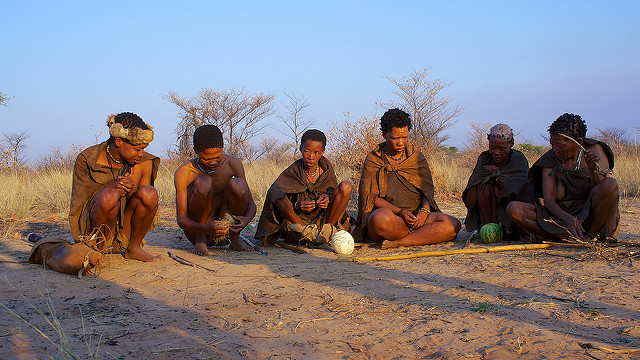
A report in New Scientist—How Changing the Way You Sit Could Add Years To Your Life— supports my Feldenkrais campaign more specifically, by revealing how beneficial it is to be able to sit comfortably on the floor in all the different positions you can think of, including kneeling, squatting, sitting cross-legged, and the highly-adaptable sitting position we Feldenkrais teachers usually call “side-saddle”. The article sits behind a paywall, however the research that it was inspired by is available here: Sitting, Squatting, and the evolutionary biology of human inactivity—such as great title!—by David A Raichlen, Herman Pontzer et alia.
…which is all very well, but as a long-term Feldenkrais teacher I am also aware that for many people sitting on the floor at all for any length of time is just too difficult to begin with.
If you would like to be better able to sit on the floor for longer periods of time the ideal solution is Feldenkrais Awareness Through Movement, and the way to improve more quickly is to do more than just the one class a week, indeed my recommendation is daily practice. This is why I regularly teach my Daily Class Courses, so that you can experience the benefits of daily practice for yourself, and have the confidence to commit to regaining some of the youthful abilities you have lost. Regular, committed practice is what works, for every real change we might desire; quick fixes to physical deterioration that has developed over time simply don’t exist.
Effortless Squatting
May 4th to 8th
Online – recordings & notes included – or sign up for the recordings if you cannot join us live…
Times: 2–3.30pm BST/9am–10.30am EDT
(Class is one hour earlier on Wednesdays)
£100 (suggested fee, or any donation welcome)
This series of daily classes is going to be somewhat more demanding than usual. The aim will be to improve our sitting ability via explorations on hands and knees, with the ultimate goal of being better able to squat, and to come up to standing from the floor.
If you are not able to manage Awareness Through Movement explorations on hands and knees then think about joining a regular class and having some individual lessons first—there is no reason to accept these physical limitations as the inevitable effect of ageing when they may well turn out to be fully reversible.
My goal is that everyone who joins this course will finish up with several comfortable options for sitting on the floor, plus a selection of useful strategies for getting up and down from the floor with greater ease – you may even rediscover some of your youthful natural grace.